
Signs Your Sewer Line Needs Repair, Not Just a Cleaning
If a snaking only buys you three weeks, the pipe is the problem. We see it every spring. Slow tubs, gurgling toilets, a sewer smell drifting across the yard, a soft wet patch on the lawn — those point past a simple clog.
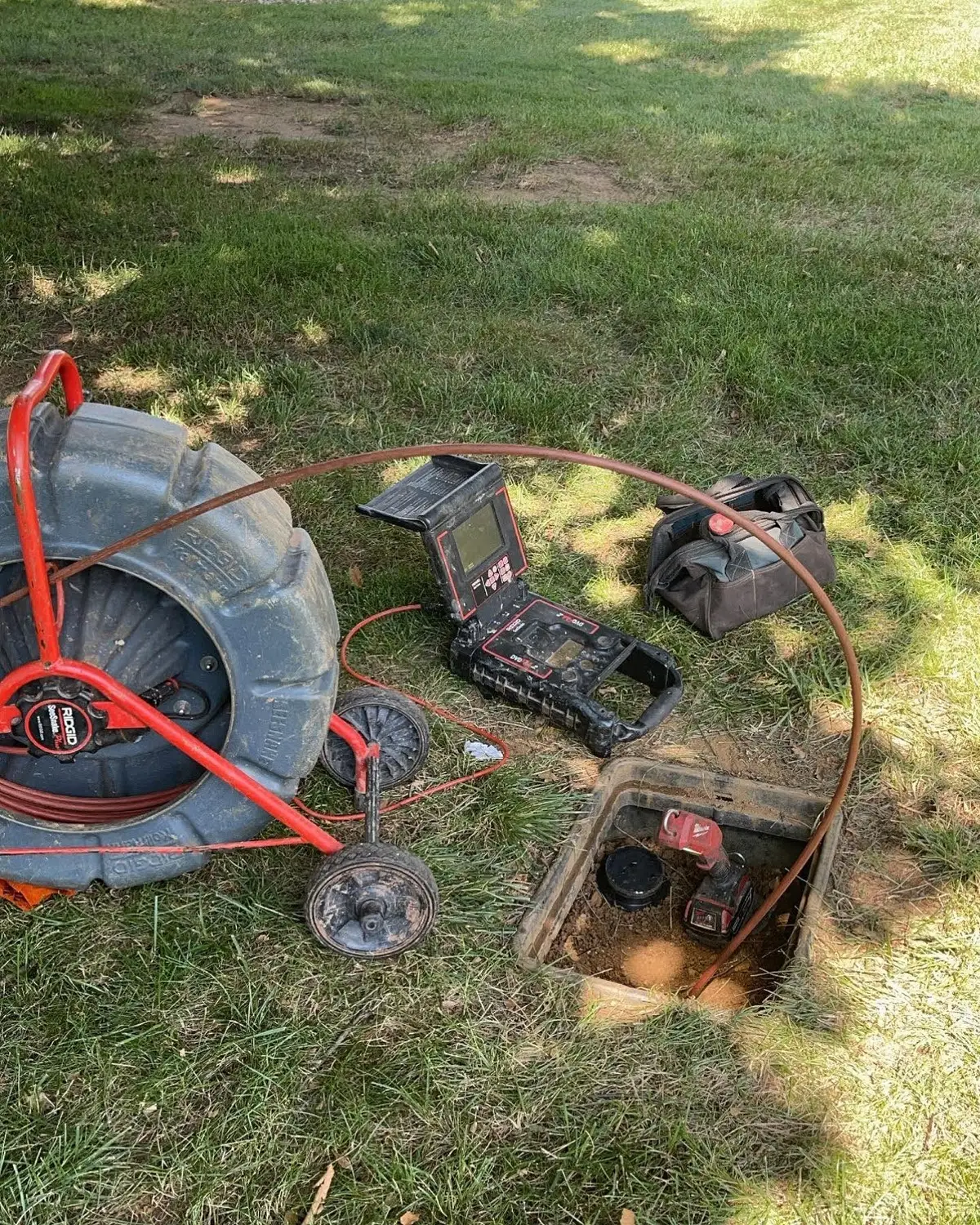
Repeat backups usually mean a cracked barrel, a belly holding water, an offset joint, or roots. We put a camera down the line before anyone plans a repair. It tells us the fault, the distance from the cleanout, and the depth. Most older Piscataway laterals we scope are clay or cast iron. Those joints crack as the ground freezes and thaws each winter.
Pipe Lining vs Pipe Bursting: Choosing the Right Method
Once the camera footage is in, there are two trenchless routes. Cured-in-place lining soaks a felt sleeve in resin and cures it inside your old pipe. That works when the host pipe still holds its round shape.
Pipe bursting is for lines that are crushed or undersized. A bursting head splits the old pipe outward and pulls new HDPE in behind it. Either way we dig a small access pit at each end, not a trench down the whole run. On tight lots with mature trees and a paved driveway, that is usually the call we make. Digging costs more than the pipe here.
When Trenchless Repair Is Not the Right Fix
Trenchless is not right for everything, and we will say so. A fully collapsed run leaves no path for the head or the liner. That needs open excavation. So does a severe belly, because you cannot correct grade from inside a pipe. The slope has to be rebuilt by hand.
Multiple sharp bends, or routing nobody can trace, can stop a liner partway. If the line is shallow under a small open yard, digging it is often cheaper. Work in the street or a utility easement brings Middlesex County and township coordination, plus traffic control. We would rather tell you that up front.
What Happens on Repair Day in Piscataway, NJ
Here is how trenchless sewer pipe repair works on the day:
- Pause water use - we ask the house to hold off, then dig an access pit at each end.
- Clean the line - the pipe is jetted and any root mats are cut free.
- Confirm with camera - a quick pass checks the pipe is clear and ready.
- Rebuild the pipe - we insert and cure the resin liner, or pull the new pipe through.
- Final camera pass - we check the finished wall and the flow.
- Restore - pits are backfilled and the yard, walk or driveway is put back.
Permits and sign-off
Piscataway Township permit and inspection steps are handled before backfill. Root balls we pull out are often dinner-plate size.
Trenchless Pipe Repair for Piscataway, NJ Homes and Businesses
Much of the housing here went up after the war and through the mid-century. Plenty of it still runs on the original clay or cast iron lateral. Clay soil holds water, and low-lying ground sits near the water table, which shifts pipe and strains joints. The USGS water science school explains how saturated ground behaves.
Freeze-thaw winters and heavy summer storms speed that same failure. Large shade trees find every open joint. Oaks are the worst we scope. Permits and inspections run through Piscataway Township, and we take trenchless pipe repair to nearby Middlesex County towns as well.
Trenchless Pipe Repair Cost in Piscataway, NJ
We price trenchless pipe repair after the camera run, not before. The length of the lateral and the depth of the line drive most of it. Pipe diameter and material matter too, along with how much root and scale cleaning the line needs first.
Lining and bursting carry different costs, and each extra access pit adds labor. What sits above the pipe counts: a driveway, a patio, a sidewalk, or a mature tree you want kept. Township permit and inspection fees apply, plus any road or sidewalk restoration required. A guess over the phone helps nobody.
Backups coming back faster each time? Don't wait for a break under the driveway. Call Edison Plumbing and Sewer at (908) 417-3246. We will camera the line, show you the footage, and tell you honestly whether a trenchless repair is the right fix for your property.