
Signs Your Sump Pump Is Failing
Your pump hums but the pit stays full. That's one of the most common calls we get. Nine times out of ten, the float is stuck against the pit wall. Other times the intake screen is packed with silt and grit. A jammed impeller, a tripped breaker, or a frozen discharge line will do the exact same thing. You can't always tell just by listening.
If your battery backup starts beeping, move fast. That beep means the main pump has quit or the power dropped. The backup is carrying the whole load by itself. Water stains on the block walls and a musty smell tell me it's been losing this fight for a while. Heavy spring rain on our clay-heavy soil keeps pits full for days at a time, not hours.
Choosing the Right Pump Size and Pit Setup
Replacing a tired old unit, or putting in your first one? Sizing starts with three numbers I always ask for: horsepower, pit depth, and discharge height. That's how high the water has to travel to get out. More vertical lift and a longer pipe run both mean less flow, no matter what the box says. I match the pump to the real run every time, not the sticker.
Submersible units run quieter and last longer than pedestal types once a basement is finished. Cast iron housings shed heat better than plastic ones do. Vertical floats work in narrow pits, while tethered floats need room to swing freely without hitting the wall.
A battery or water-powered backup gets you through a storm outage, which around here happens more than folks expect. The pump needs to sit on a GFCI outlet with its own dedicated circuit. Older homes in this area often have shallow block pits, and those usually need resizing before anything new goes in.
What Happens on Installation Day in Piscataway, NJ
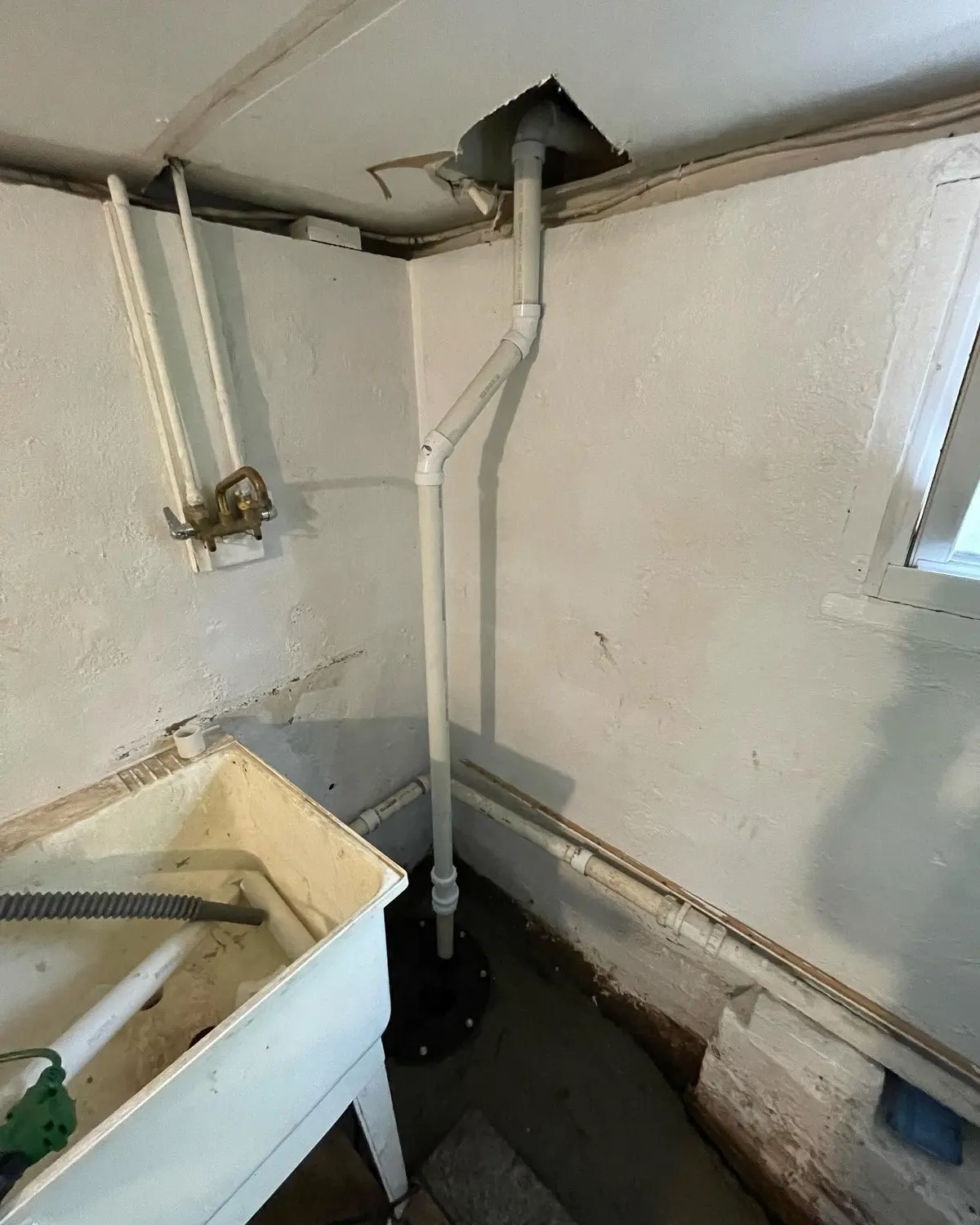
I start by checking the pit for depth, cracks, and built-up silt. Once that's clear, the pump sits level on a solid base, not propped on a brick. I still see that more than you'd think. A check valve goes on the discharge line just above the pump. That way water that's already been lifted can't drain right back down into the pit.
Discharge gets routed outside and away from the foundation. It can never tie into the sanitary sewer line. That's a code violation, plain and simple, and it floods the whole system during a storm. Power runs to a GFCI outlet, no exceptions.
In a basement with a poured slab, I core drill or dig the pit by hand. There's no shortcut here, and it's slow work in a tight space. Before I pack up any job, I pour a bucket of water in. I lift the float myself to watch it cycle. For New Jersey winters, the outdoor line gets freeze protection. An ice plug at the outlet defeats the whole system.
Testing and Upkeep That Keeps Water Out
Pour a bucket of water in once a month. Run a full check before spring and fall storms roll through. It takes about two minutes, and it's the cheapest insurance you'll ever buy for a basement.
After a heavy rain, a healthy pump cycles for a minute or two at a time, then rests. Nonstop running, or quick on-off cycling every few seconds, means trouble is brewing. Clean the pit, the intake screen, and the check valve once a year. Swap the backup batteries every few years, even if they seem fine.
Near the Raritan River corridor, the water table sits high. Pumps out there cycle almost year-round instead of just after storms. On a unit that's been worked that hard, I'll usually tell you to replace it. It's not worth chasing small repairs that won't hold.
- 1. Lift the lid and look for silt or gravel in the pit.
- 2. Pour about five gallons of water in slowly.
- 3. Watch the float rise and the pump kick on.
- 4. Step outside and check the discharge for steady flow.
- 5. Listen for grinding or rattling at the impeller.
- 6. Confirm the pump shuts off once the pit drains.
- 7. Press the test button on any battery backup.
Sump Pump Installation for Piscataway, NJ Homes and Businesses
Split-levels, ranches, and mid-century basements make up a lot of the housing stock around here. Many of them sit on clay and silt that drain slowly after a storm. Groundwater ends up pushing sideways against block foundations instead of soaking straight down. That's exactly why a sump pump earns its keep in this town.
Plumbing permits and inspections go through the Piscataway construction office. I handle all of that paperwork myself so you don't have to chase it down. We also work in Edison, Highland Park, Dunellen, and South Plainfield.
Not every house needs one, though. A dry crawl space and grading that slopes away from the house help. A working French drain can sometimes be enough on its own. You can check your area's flood risk through FEMA's flood map service before deciding either way.
Sump Pump Installation Cost in Piscataway, NJ
Pump type drives most of what a sump pump installation costs. A small plastic submersible costs less to set than a cast iron unit built for constant, heavy duty. Digging a brand-new pit in a poured slab takes far more labor than reusing a basin that's already sound.
Discharge length matters too, along with routing around finished walls and adding freeze protection outside. If there's no GFCI outlet nearby, an electrician has to add a dedicated circuit, and that's its own line item. Battery or water-powered backups add parts and wiring on top of all that.
Permits and after-hours emergency scheduling move the number as well. I walk the basement first, every time, before I quote anything. You get the full picture before a single pipe gets cut.
Water doesn't wait for a dry weekend. If your pit is filling, your pump has gone silent, or your backup is beeping, call us now. Edison Plumbing and Sewer is at (908) 417-3246. We'll test what you've got and get a working pump under your floor before the next storm hits.