Signs Your Main Sewer Line Is Blocked in Piscataway, NJ, Not Just a Slow Drain
One slow sink is a trap problem. When two or more fixtures act up together, the main line is blocked. Listen for a gurgling toilet, or tub water rising when the washing machine drains. A sour sewer smell in the basement points the same way.
The floor drain is the clearest warning of all. It sits lowest in the house, so waste shows up there first.
- Two or more fixtures backing up at the same time
- Toilet gurgles when another fixture runs
- Water at the basement floor drain
After a hard rain
Older homes here on clay or cast iron lines often back up a day or two after heavy rain. Groundwater swells the joints and pushes debris into a tight spot.
When Snaking Clears the Line and When It Will Not
A cable cuts roots, grease and paper. It will not repair a broken pipe. If the same line backs up twice in a month, something structural is wrong. Usually that is a bellied section holding water, or a crushed length of pipe.
At that point a camera inspection tells us more than another cable run. Heavy grease often calls for hydro jetting instead. If only one fixture drains slowly, you need a fixture-level clear, not a main line sewer snake.
Mature trees near an older lateral are the usual culprit. Roots find the joint, not the middle of the pipe.
What Happens During a Sewer Snake Visit in Piscataway, NJ
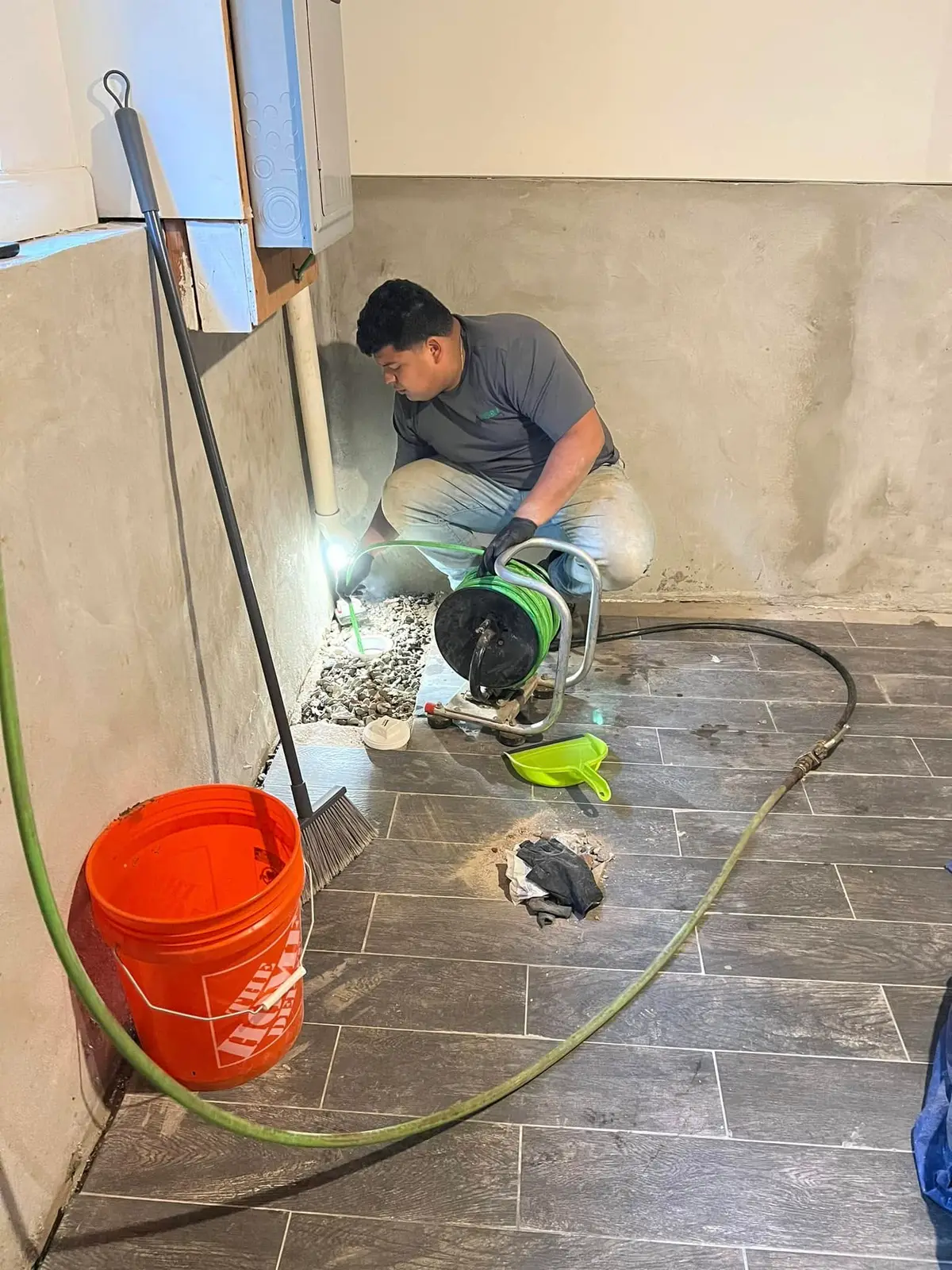
We find the cleanout first, outside near the foundation or down in the basement. No cable goes in until we have a clean entry point. Then we match sewer snake cable size and cutter head to the blockage.
Roots take a sharper head than a soft paper clog. We run the line all the way to the city main. After that we flush fixtures and watch the flow before packing up.
Most visits run one to two hours. We need a clear path to the cleanout, which matters in split levels and ranch homes where storage piles up around it. Ten minutes of moving boxes helps.
Keeping the Line Clear After the Blockage Is Gone
Wipes are the worst offender, even the ones labeled flushable. Keep grease, paper towels and hygiene products out too. Roots grow back on a season cycle, so a line cleared for roots usually needs attention again within a year or two.
Downspout and sump pump water should never tie into the sanitary line. The EPA explains how that extra flow causes sanitary sewer overflows during storms. Spring thaw and summer downpours across Middlesex County raise the risk sharply.
Watch for slow tubs or a faint odor in the months after. Those come back before a full backup does.
Sewer Snake for Piscataway, NJ Homes and Businesses
Housing here is a mix of mid-century ranches, split levels, newer townhomes and small commercial buildings. Older sections still run clay tile or cast iron laterals. Newer builds use PVC, which handles roots far better.
The clay-heavy soil is the real problem. It swells and shrinks with freeze-thaw cycles, and that shifts old joints apart. Once a joint opens, roots follow the moisture straight in.
Township and Middlesex County rules set who owns which part of the lateral, and the homeowner usually owns the run to the main. Restaurants and shops with grease-loaded lines need scheduled sewer snake service, not one-off calls.
Sewer Snake Cost in Piscataway, NJ
Access drives the price more than anything. A proper cleanout is quick work. Pulling a toilet or working from a roof vent takes longer and adds labor.
Blockage type matters next. A soft paper clog clears fast, while heavy grease or a thick root mass needs more cable time and a tougher cutter. A long run from the house to the city main adds time as well.
Emergency, after hours and weekend calls cost more than a scheduled visit. A camera inspection is an add-on when the cause is not obvious. Commercial lines with larger diameter pipe need bigger equipment.
Standing water at the floor drain will not wait, and it gets worse every hour you run water upstairs. Call Edison Plumbing and Sewer at (908) 417-3246 and we will get a cable in the line today. Evenings and weekends covered.