
Signs Tree Roots Are in Your Piscataway, NJ Sewer Line
Roots almost never bother just one fixture. They choke the main line, so every drain in the house slows down around the same time. Listen for a toilet that gurgles while the washer drains, and take a sniff near the basement floor drain if things smell off. We see it every spring, like clockwork.
- Slow drains everywhere - tub, sink and toilet all crawling, with backups right after laundry
- Soggy or oddly green patches - a stripe of lush grass over the yard line means the pipe is leaking and feeding it
- Old pipe joints - clay and cast iron sections under older Piscataway homes are the usual target, and mature street maples push roots toward warm, damp joints
What a Camera Inspection of Your Sewer Shows
If you've had the same backup twice, you want proof before anyone starts digging. We run the camera in through an existing cleanout, or pull a toilet when there's no other way in. Then we follow the line all the way to the main.
On the screen you see the root mass, cracks, offset joints, and the low spots that hold standing water. You also find out what the pipe is actually made of, which isn't always what the homeowner thinks. Almost always the roots are sitting right at a joint, not out in the middle of a pipe run. A locator marks depth and path across the yard after, so any digging is planned instead of guessed at. Worth doing before a home sale or before permit work starts.
How Roots Are Cut and Cleared From the Line
We start with a cable machine and a root-cutting blade sized to fit the pipe. That shears the root mass back to the wall. Then hydro jetting scours the pipe walls and flushes out the stringy debris roots always leave behind. A blade alone just skates past that mess and leaves it sitting there.
A second camera pass confirms the flow is back to full diameter. Where the pipe shell is still sound, a foaming root treatment at the joints slows how fast roots come back. Frozen ground in January makes yard access harder. So does soaked spring soil. We plan outside work around the season.
When Clearing Is Enough and When the Pipe Needs Repair
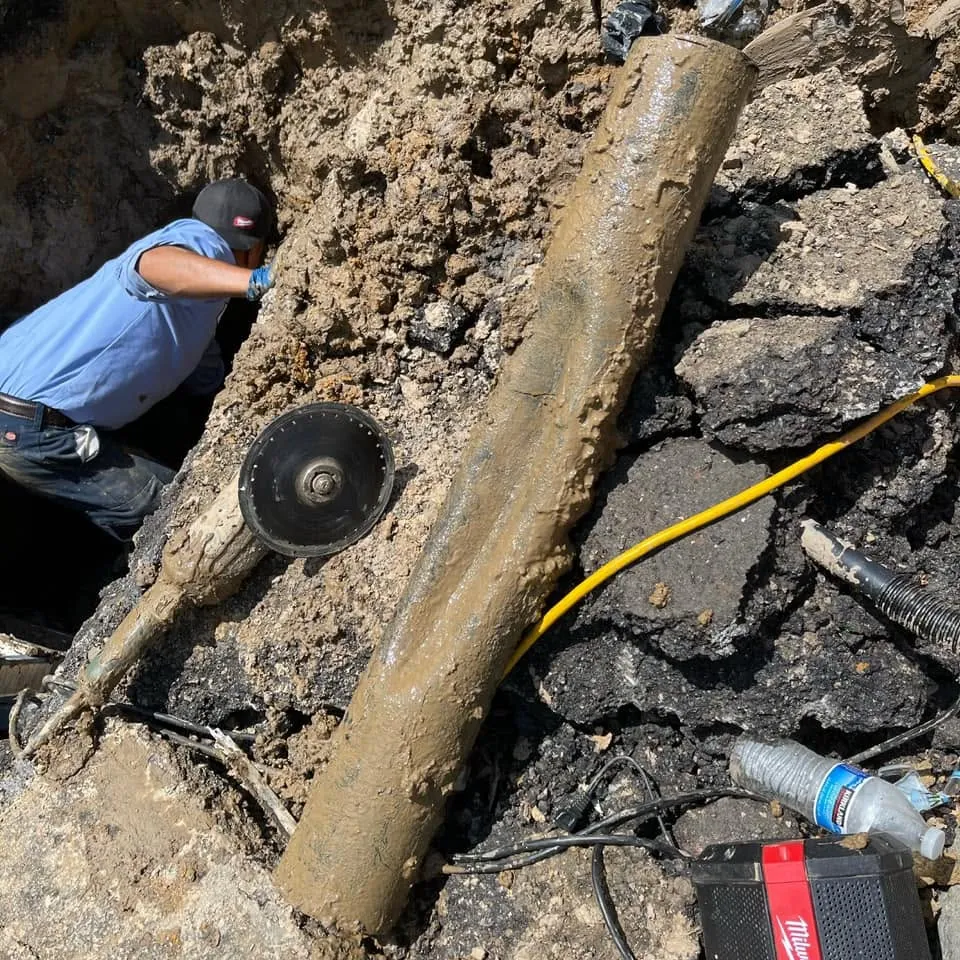
Clearing holds up fine when the joints are tight and the pipe wall is still intact. Roots get trimmed, flow comes back, and a yearly cut keeps it honest for years. But once roots are getting in through actual cracks, offset joints, or collapsed clay, that's different. Cutting them out then is just a season of relief at best.
At that point it's a repair job. A spot repair handles one bad section; full replacement makes sense when the whole clay run is shot through. Trenchless lining saves the driveway when the host pipe still holds its shape - otherwise we open cut it. Some calls aren't even ours to fix. A single slow fixture, or a bad vent, is a completely different problem. And any main line dig means township permits and right-of-way rules.
Sewer Roots for Piscataway, NJ Homes and Businesses
Plenty of post-war and mid-century houses around here still run their original clay lateral out to the street. The soil here is loamy and often damp. Moisture sits right at the joints, and that's exactly what a root goes looking for. Freeze-thaw through a Jersey winter nudges those joints apart a little more and opens fresh entry points every single year.
The township handles sewer permits, inspections, and right-of-way openings. Backed-up laterals are part of the bigger picture the EPA lays out in its guidance on sanitary sewer overflows. We handle sewer roots in Piscataway and nearby Edison, Highland Park, Dunellen, Middlesex, and South Plainfield.
Sewer Roots Cost in Piscataway, NJ
Length and depth drive most of the cost. A short, shallow lateral is a different afternoon of work than a long run buried six feet down. Pipe material and condition matter too - clay, cast iron, Orangeburg, and PVC all behave differently under a cutter head.
Access is the quiet factor nobody thinks about. An existing cleanout saves real time, while pulling a toilet or digging a brand-new access point adds to the bill. Then it comes down to scope - cutting only, or cutting plus hydro jetting, camera work, and a follow-up treatment. After-hours calls, permits, and any yard or sidewalk restoration all factor into a sewer roots job too.
Backing up right now, or gurgling every time the washer runs? Roots don't stop on their own, and the next backup usually lands in the basement. Call Edison Plumbing and Sewer at (908) 417-3246 and we'll get a cable and a camera on your line.