
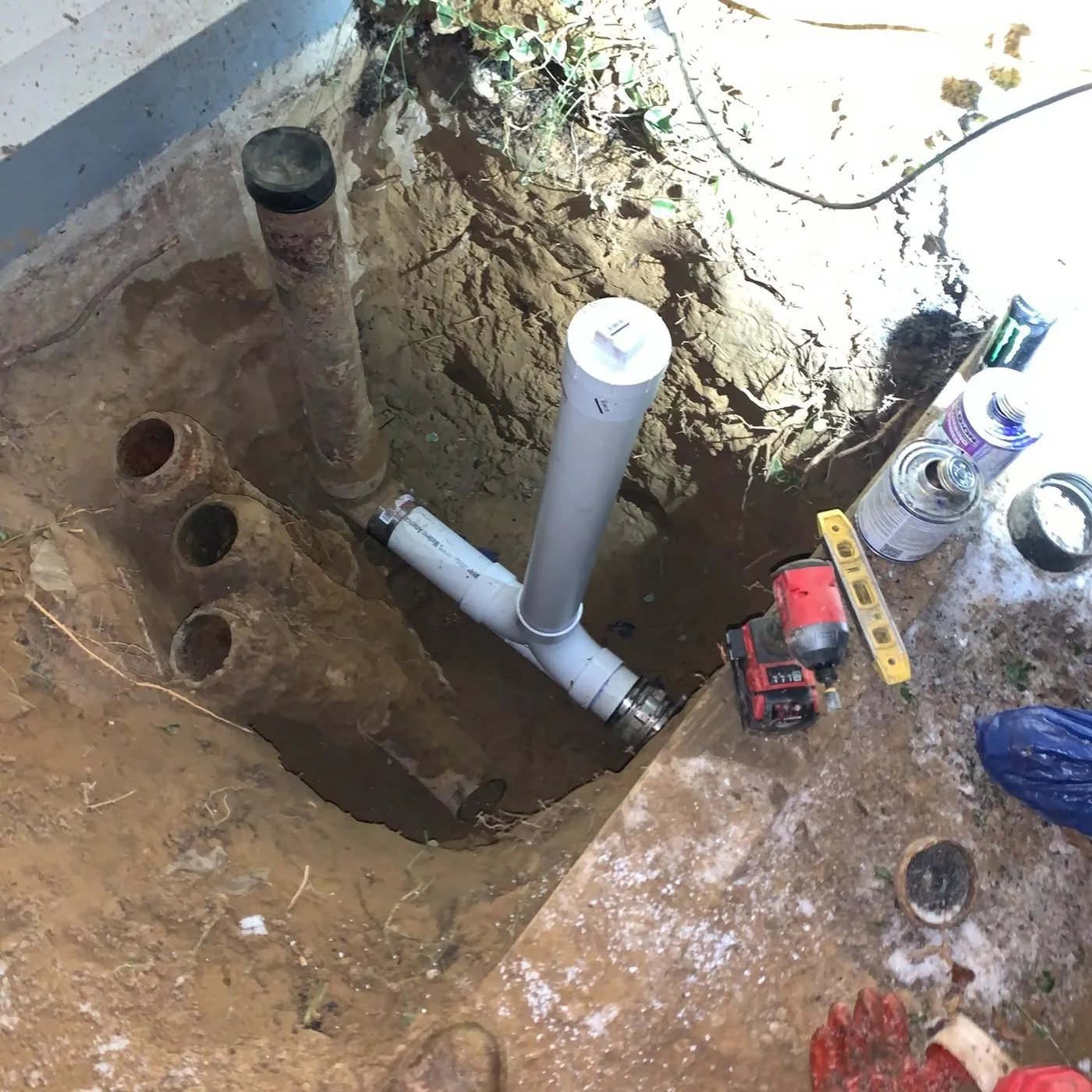
Signs Your Sewer Line Needs Replacement, Not Another Cleaning
If you have snaked the same line more than once in a year, cleaning is no longer the repair. Backups show first in the lowest drain. A slow basement tub, a gurgling toilet, a sewage smell drifting across the yard. A soggy or bright-green patch of grass means the pipe is leaking below it.
A camera tells the rest. These findings point to replacement:
- Collapsed pipe - the crown has fallen in and nothing passes
- Offset or separated joints - sections have pulled out of line
- Root-packed clay or a bellied run - standing water that never clears
Why older laterals fail here
Older Piscataway homes often run clay or cast iron laterals. Shifting, freezing soil cracks them. We see it every spring.
When a Repair or Lining Is Enough
Full Sewer Replacement is often the wrong call, and we will say so. A single crack, one bad joint, or damage in a short run near the house can be cut out and spliced. That is a half-day job, not a week.
Roots in otherwise sound pipe are a different story. Cutting the roots and making a spot repair at the one bad joint usually holds. Wipes, grease, or a badly pitched fixture connection inside the house are not sewer problems at all. Nine times in ten, that trouble starts above the floor.
Camera footage and depth readings decide it. Honest answer first.
Trenchless and Open-Cut Sewer Replacement Explained
Trenchless Sewer Replacement by pipe bursting pulls new HDPE pipe along the old path. We dig two small pits, one at the house and one at the main. Lining works much the same way, curing a new pipe inside the old one. Your driveway, patio, and mature trees stay where they are.
Open-cut trenching is for collapsed lines, sharp bends, or pipe sitting too shallow. It means a trench across the lawn, and sometimes the apron.
Most jobs run one to two days. Water is off for a few hours, and the toilet is back that evening. High water table and heavy clay soil in parts of Middlesex County can force open-cut even when we hoped otherwise.
What to Expect on Replacement Day in Piscataway, NJ
Markout comes first on every Sewer Replacement. Gas, water, and electric lines get located and painted before a shovel moves. No digging happens until those marks are down.
We pull the township permit and schedule inspection. If the line crosses the sidewalk or street, road opening rules apply and restoration is part of the job. Please clear the driveway, move planters off the path, and keep pets inside.
Expect noise and a machine working down a narrow driveway. Spoil gets stacked on boards to protect the grass. Backfill is compacted in lifts, not dumped. That step is what stops a trench from sinking two winters later.
Sewer Replacement for Piscataway, NJ Homes and Businesses
Much of the housing stock here went up after the war and through the mid-century. Those houses still carry original clay laterals, and some have Orangeburg - tar paper pipe that goes oval and collapses with age. When we pull a section out, it often tears like wet cardboard.
Freeze-thaw cycles and clay soil work joints out of line season after season. Mature street trees find those gaps and fill them. Every township permit we pull needs inspection sign-off before we backfill, so the trench stays open until the inspector has seen it.
We handle Piscataway houses, rentals, and small commercial buildings.
Sewer Replacement Cost in Piscataway, NJ
The run itself drives most of it. A long distance from house to main costs more than a short one, and depth matters as much as length. Pipe sitting eight feet down needs shoring and a bigger machine.
Method changes the number too. Trenchless or open-cut is decided by pipe condition and soil, not preference. Obstacles add work: a driveway, a sidewalk, mature tree roots, a patio, a retaining wall.
Permits, inspection, and any road opening restoration are real line items. So is emergency timing, a high water table that needs pumping, and adding a cleanout if the house never had one. The EPA explains how cracked laterals feed sanitary sewer overflows during wet weather.
Raw sewage in the basement does not wait, and neither should the camera inspection. Call Edison Plumbing & Sewer at (908) 417-3246 and we will scope the line, show you the footage, and tell you whether it is a repair or a replacement. Same conversation, no guessing.